 |
JS8Call-Improved master
|
|
JS8Call-Improved master
|
#include <DriftingDateTime.h>
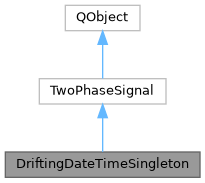
Public Slots | |
| void | setDrift (qint64 ms) |
| Set the drift. | |
| void | onPlumbingCompleted () const |
| Emits to the driftChanged signal (as per TwoPhaseSignal contract). | |
| Public Slots inherited from TwoPhaseSignal | |
| virtual void | onPlumbingCompleted () const =0 |
Signals | |
| void | driftChanged (qint64 new_drift) const |
Public Member Functions | |
| qint64 | drift () const |
| Retrieve drift, in milliseconds. | |
| QDateTime | currentDateTimeUtc () const |
| QDateTime | currentDateTimeLocal () const |
| qint64 | currentMSecsSinceEpoch () const |
| qint64 | currentSecsSinceEpoch () const |
| Public Member Functions inherited from TwoPhaseSignal | |
| TwoPhaseSignal () | |
| This is a humble helper class for Qt signals and slots when this mechanism is also used to initialize the data. In that case, we first do the "plumbing" phase, where signals and slots are connected as appropriate. After that has been completed, signals are to be sent in a volley so that an required initial values are being set. | |
Static Public Member Functions | |
| static DriftingDateTimeSingleton & | getSingleton () |
| Get the singleton instance. | |
JS8Call allows the user to manipulate the clock.
One intention is: If a QSO partner's clock is off too much, we can set our clock to correspond to that partner's clock. This increases the probability of successful decodes on both sides.
Alternatively, we may not be able to set our own computer's clock with appropriate precision. If so, we can manipulate our JS8Call-internal clock, e.g., based on incoming JS8 signals, to fit other folks' clocks.
There is only one, central clock for the entire application.
The manipulated clock is ubiquitously used throughout JS8Call. This includes timestamps logged to ALL.TXT or via Qt logging. This makes it easier to judge, especially when reading the Qt logs, whether JS8Call's timing is as it should be.
There is exactly one object of class DriftingDateTimeObject (singleton pattern).
Drift specified as a qint64 is always in ms. A positive drift means that the JS8Call internal clock is that many milliseconds later than the system clock, a negative drift that many milliseconds earlier.
This functionality is (intended to be) thread-safe, with the exception of the setDrift(), which must be called by the same thread that originally constructed the object. If you want to make sure this is not violated, send the new drift value as a signal.
|
inline |
Retrieve drifted "now" as local time.

|
inline |
Retrieve drifted "now" as UTC.

|
inline |
Retrieve drifted "now" as milliseconds since epoch.


|
inline |
Retrieve drifted "now" as seconds since epoch.
As we found out experimentally, QDateTime does not round, but truncates. So we do that, too. In other words, the number returned is the number of fully elapsed seconds since the epoch.

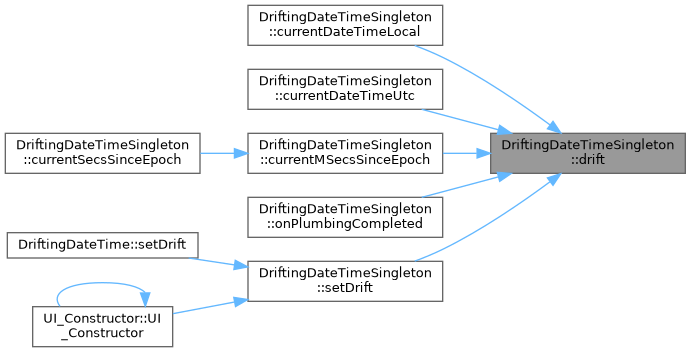
| qint64 DriftingDateTimeSingleton::drift | ( | ) | const |
Retrieve drift, in milliseconds.
Retrive drift, in milliseconds.
Positive values indicate the drifted clock is behind the system clock, negative, it is early.
Positive values indicate the drifted clock is behind the system clock, negative, it is early.
|
signal |
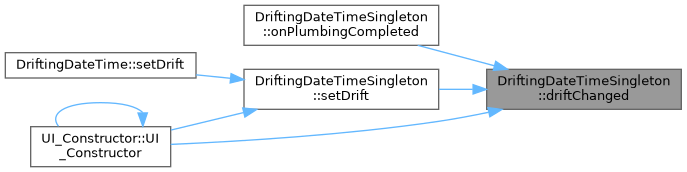
Communicate the drift change to anyone who want to know.
This outgoing signal is the main motivation for introducing this class in the first place, rather than just using static methods.
|
static |
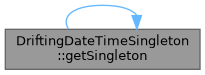
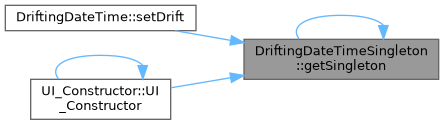
Get the singleton instance.
The first thread that calls this is the thread the singleton lives in.
|
slot |
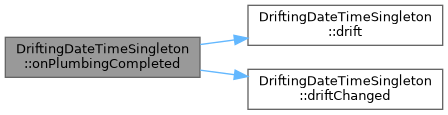
Emits to the driftChanged signal (as per TwoPhaseSignal contract).
Emits to the driftChanged signal (as per TwoPhaseSignal contract).
|
slot |
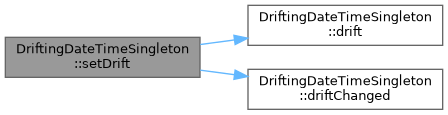
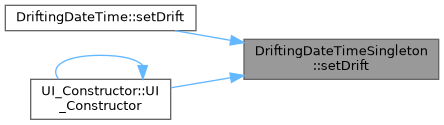
Set the drift.
Set the drift.
| ms |
 1.16.1